Most clients come to me with the same questions: how long will it take, what will I get, and when can I see something. This post answers them in one place, so you know what to expect before we even talk.
Six stages, each with a clear result
I split every project into stages. Each one ends with something concrete you can look at and approve before we move on. That way there are no surprises at the end.
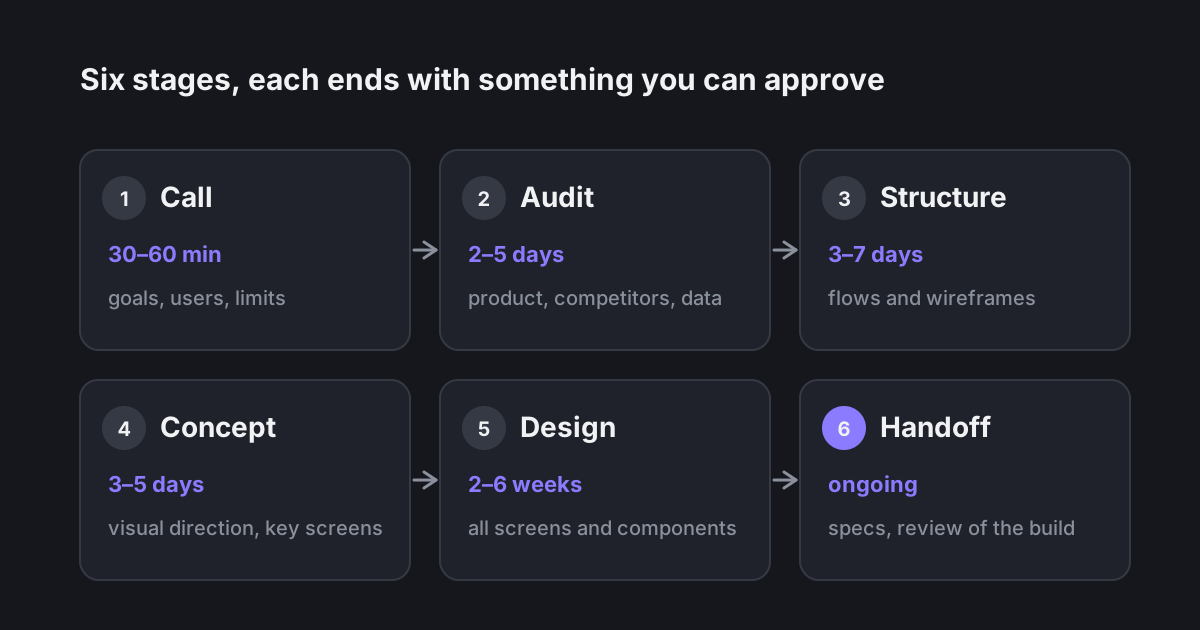
1. Call. We talk for 30–60 minutes about the business goal, who the users are, deadlines, budget and technical limits. After the call I send a short summary and an estimate.
2. Audit. I study the current product, competitors and any data you have: analytics, support requests, interviews. The result is a list of problems ranked by impact.
3. Structure. User flows and grey wireframes. No colours yet, only logic: which screens exist, what is on them and how people move between them.
4. Concept. Two or three key screens in the final style. This is where we agree on the visual direction before scaling it to the whole product.
5. Design. All screens, states and edge cases, mobile and desktop, built on components so the product stays consistent.
6. Handoff. Specs for developers, answers to their questions and a review of the build, so what goes live matches the design.
Why I start with structure, not pixels
The same change costs very different effort depending on when it happens. Moving a button in a sketch takes a minute. Moving it after release means design, code, testing and a new version.
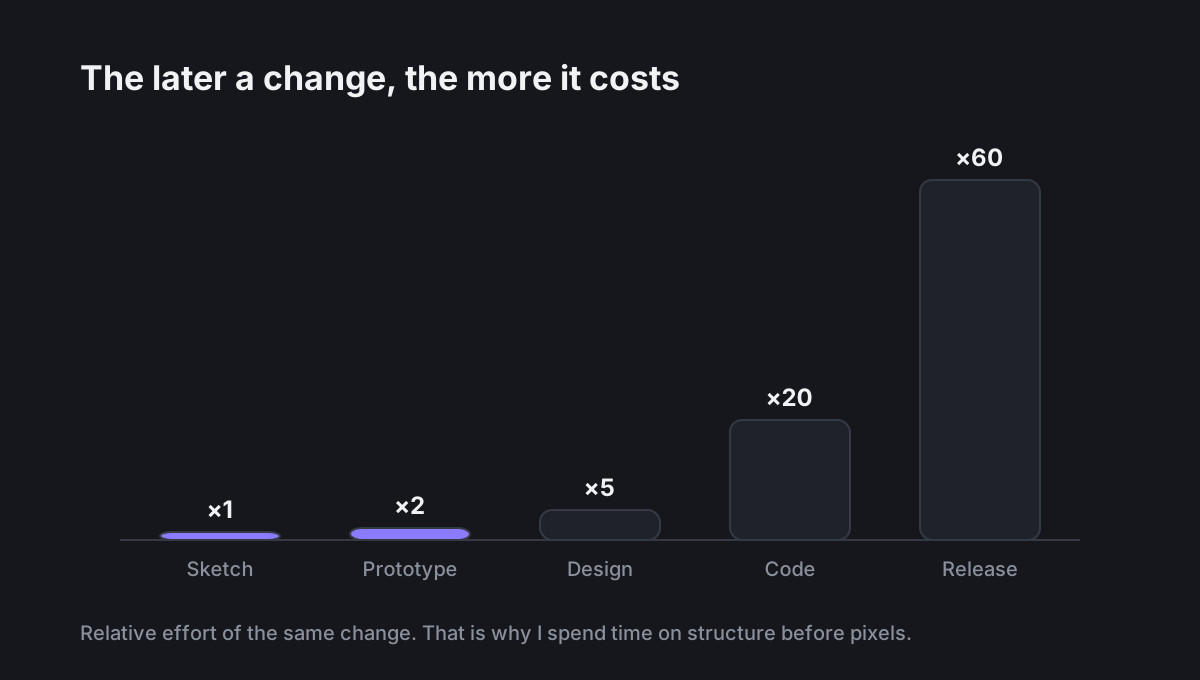
That is why the first stages may look "unpretty". It is the cheapest moment to make big decisions, and I would rather argue about arrows than about finished screens.
What you get
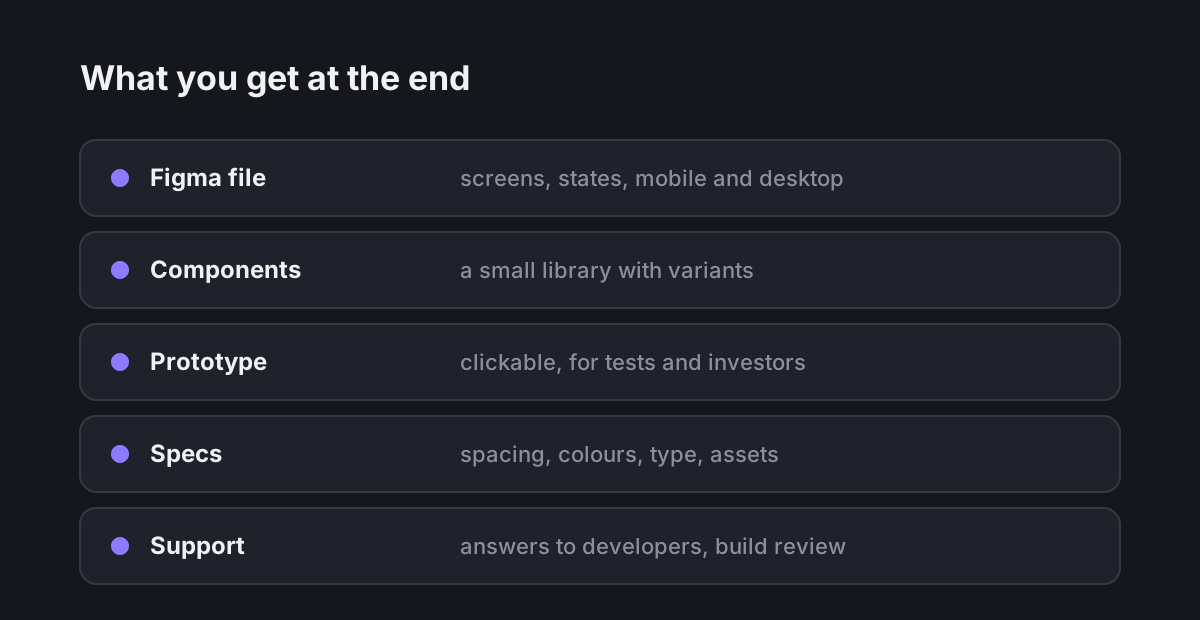
All files stay with you. I organise the Figma file so another designer or your developers can pick it up without me.
How we communicate
- One chat (Telegram or Slack) and a short update at the end of each working day.
- A call at the end of each stage to show the result and collect feedback.
- Two rounds of revisions per stage are included. If the brief changes along the way, we agree on it openly.
Timing and budget
A small landing page takes about two weeks. A product with a dozen key screens takes four to eight weeks. The estimate depends on scope, so I always give it after the first call, not before.
You can see the result of this process in my case studies, for example the ChainPort cross-chain app.
Want to discuss your project? Leave a request and I will get back to you within a day.